Dealer Calls and the Rhythm of a Table
Learn how dealer calls and gestures mark casino table play, so you can follow open betting, turns, closing cues and results without guessing.

A roulette dealer calls that betting is closed and moves the marker towards the wheel. The phrase and the movement mark the same boundary. Dealer calls and gestures are easier to read when you treat them as parts of a sequence, not as a code to memorise.
Opening cues
An opening call marks a shift from a settled table to active play. Wording varies by game and venue, but the purpose is to announce that a round or betting phase is beginning. A dealer may address the table, scan the players or gesture towards the playing area.
Notice what happens before the first card, spin or other game action. A greeting is general table talk; a call that opens play changes what participants may do. The timing and context distinguish the two more reliably than the wording alone.
Betting boundaries
During a betting phase, announcements and gestures help show whether a decision remains open. At roulette, a closing call may accompany the marker moving towards the wheel. At a card table, the dealer may indicate whose decision is due. The words name the change; the movement often shows where it applies.
Think of a door sign paired with the door closing. The sign states the instruction, while the movement makes the moment clear. At a busy table, either cue can be missed, which is why the combination matters.
Turns in sequence
As a round progresses, the dealer’s attention, words and handling of cards can show whose turn is invited and when play moves on. A gesture may be meaningful at one table without having the same meaning at another. Read it alongside the game action and the player or area involved.
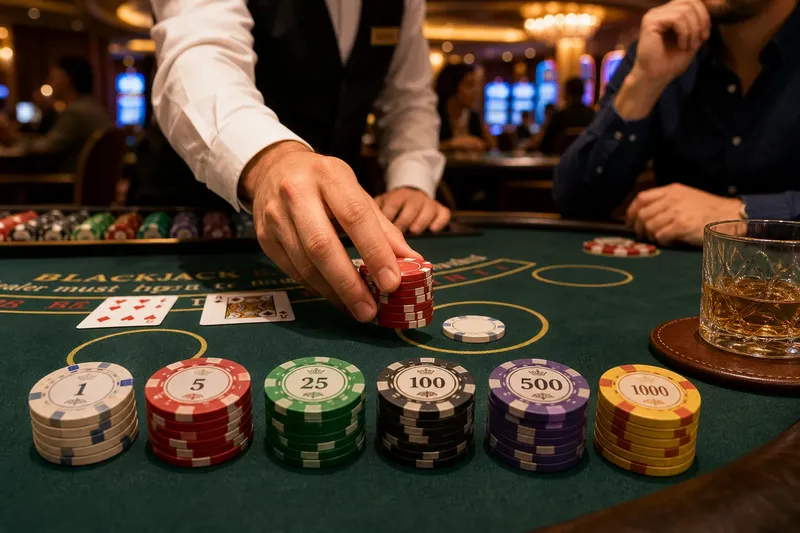
Say you are watching a blackjack hand from the end of the table. The dealer indicates a player, who makes a decision, then turns towards the next seat and deals. Following that order tells you whose turn has ended and where attention has moved, even if you do not yet know every rule.
Closing calls
A closing call marks a boundary: further wagers are no longer part of that round, or a decision has been made and play is moving towards its outcome. A marker may be moved, a hand withdrawn from the betting area or a card turned over. Those actions help make the transition visible.
After the boundary, gestures are generally about resolving the round rather than inviting another choice. If you are unsure whether an action is still allowed, pause and ask the dealer before acting. A guess made after the call may be difficult to undo.
Results and settlement
At the end of a round, a dealer may announce the result, indicate the relevant hand or betting area, then handle cards, chips or markers to settle the table. Following that order helps you connect the spoken result with the part of the table it affects.
Do not assume a gesture has a universal meaning. Its significance depends on the game, the moment and the local procedure. The dealer’s explanation and the table’s posted guidance take precedence over a signal remembered from somewhere else.
Questions at the table?
Why does a dealer announce a change?
A call makes a transition audible to people who may not be watching the dealer. It gives the table a shared cue that play has opened, closed or reached a result.
What should I watch besides the words?
Notice where the dealer directs a hand, card or marker, and which player or area is involved. That context often clarifies what a short announcement means.
Do gestures mean the same thing at every table?
No. Calls and gestures depend on the game and the venue’s procedures. If a signal is unclear, ask before making a decision.
Reading a live sequence
Imagine you have just sat at a roulette table and are unsure whether betting is still open. You hear the dealer make a closing call and see the marker move towards the wheel. You hold your chips rather than placing a wager; the visible result is that you avoid acting across the announced boundary. If you still cannot tell what the marker means, wait until the round ends and ask the dealer to explain the local procedure.
- Observe whether the dealer has announced that betting is open; if so, follow the table’s stated betting procedure, and if not, wait for the opening cue.
- Observe whether a closing call has been made; if so, keep chips out of the betting area, and if not, check the game’s current phase before acting.
- Observe which player the dealer addresses; if it is your turn, follow the game’s rules, and if it is another player, wait rather than interrupting.
- Observe whether a card or marker has been moved to indicate a result; if so, let settlement proceed, and if not, wait for the dealer’s next announcement.
- Observe whether the gesture matches the game and area in front of you; if it does, use that context to follow the sequence, and if it does not, ask between rounds.
- Observe whether the table’s posted guidance explains the call; if it does, follow that local procedure, and if it does not, ask the dealer for clarification before acting.
Questions are best saved for a pause between rounds, when the dealer is not managing an active decision. Dealer calls and gestures mark the rhythm of table play: opening action, directing turns, closing choices and settling results. Knowing the local cue matters more than carrying a supposed universal signal from one game to the next.