How Casino Film Scenes Build a World Through Sound and Space
Casino film scenes use sound, light and framing to make fictional venues feel vivid. Learn to read the choices that guide mood, attention and story.
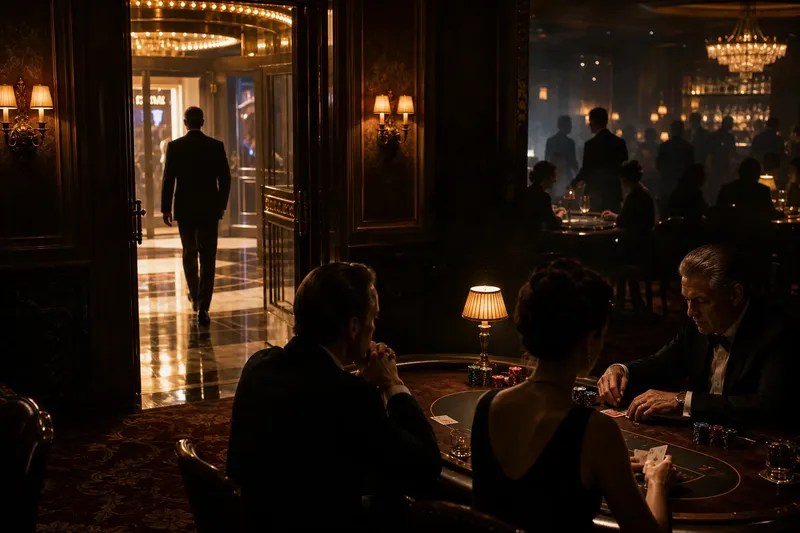
A character steps from a bright entrance into a dim room; a low murmur follows as the camera settles on one table. Casino film scenes can make that brief walk feel like entry into a whole world, even when the audience sees only a few carefully chosen details.
Rooms serve stories
A doorway can make an entrance feel ceremonial. A narrow corridor can turn a walk towards the gaming floor into an ordeal. A table near a window may make a meeting feel exposed, though the rest of the room remains unseen.
Filmmakers choose what the audience notices. Working buildings need routes for staff, storage and ordinary movement. A frame can omit all of that, or place features together because the arrangement makes the action easier to read.
The frame works like a theatre set: a painted doorway can suggest a much larger house without needing to contain one. In a casino scene, selected objects and surfaces can imply glamour, risk or unease. They need to support the moment, not account for every practical need.
Light directs attention
Lighting can tell the audience how to read a room before anyone speaks. Warm, low light may make a table feel secluded. Reflections across a polished surface can suggest grandeur with a colder edge. A hard spotlight can isolate one person from the crowd and turn a public space into a private contest.
Notice where the light falls, not only how bright the room appears. A face in shadow while cards and chips remain clear can suggest guarded intent. A bright entrance behind a character may draw attention to a new arrival. Small shifts in emphasis can carry a scene without dialogue explaining its mood.
Wall sconces and table lamps help anchor the setting, but they do not have to explain every patch of brightness. Film lighting is arranged for the camera and performers, so a room that looks coherent on screen need not behave like an ordinarily lit public interior.
Sound defines distance
A fictional casino can feel busy through a few audible cues. A wash of conversation suggests a crowd. A card placed on felt draws the ear towards one table. A pause in the background can make a question feel weightier than its words alone.
Listen for what the scene reduces or removes. Clear voices over distant ambient noise draw attention to a conversation. Music and room sound kept prominent can make people seem swallowed by the venue. Neither choice describes the acoustics of every casino; each shapes the viewer’s sense of space.
Sound can also join separate shots. The same murmur heard in a corridor and at a table suggests one continuous place, even when the images offer little evidence of its layout. The audience connects the locations without being shown every wall.
Movement finds focus
Camera movement and blocking reveal which parts of a room matter. A slow track behind a character can make the walk itself feel important. A fixed camera with activity crossing the foreground may make the character look watchful or out of place. When a wide view gives way to a close-up, the room recedes and a decision takes over.
Watch where a character stops. Framed between a table and a doorway, they can appear caught between staying and leaving. Furniture becomes part of the predicament rather than mere decoration.
Say a fictional scene begins with a character entering beneath a bright sign, follows them past indistinct tables, then settles on a quiet corner. The expected effect is a shift from public spectacle to private tension. The audience can feel the change without seeing a map or learning what lies behind every door.
Costume and props signal
Clothing and hand-held objects create readable distinctions. A sharply cut jacket may separate a visitor from staff. A glass, folded programme or small clutch can give someone something to do while waiting. These details may hint at money or confidence, but they do not establish a full biography.
Props also anchor action in a close shot. A hand beside a card makes the table legible after the wider room has vanished. The object must read clearly at the scale and angle of the shot, so a modest prop can carry more screen weight than an architectural feature left out of focus.
Reading casino film scenes?
Why show only part of the casino?
Partial views keep attention on the characters and their immediate conflict. They also let separate sets, locations or camera angles suggest a larger venue without showing it all at once.
How does colour alter the mood?
Colour can distinguish areas or emotional beats: amber may feel intimate, while cooler tones can seem distant. Its meaning depends on the surrounding image, so colour is a clue rather than a fixed code.
Are casino scenes realistic?
Some details may resemble real venues, but scenes are arranged to serve the story and camera. Treat them as designed images, not reliable accounts of how a complete casino operates.
What should I notice in a close-up?
Look at which hands, objects and faces remain visible, and which parts of the room disappear. That selection often shows where the scene wants your attention to settle.
Notice the omissions
The useful question is not whether a film has shown a whole casino. Ask what the frame has made legible: an entrance, a table, a face or a possible exit. In casino film scenes, omitted space is part of the design. Watching for those choices helps distinguish the story’s imagined venue from the practical building it only suggests.