How Casino Images Became Public
Casino images changed from prints of particular gaming rooms to familiar signs of glamour and risk; learn what historical pictures can—and cannot—show.
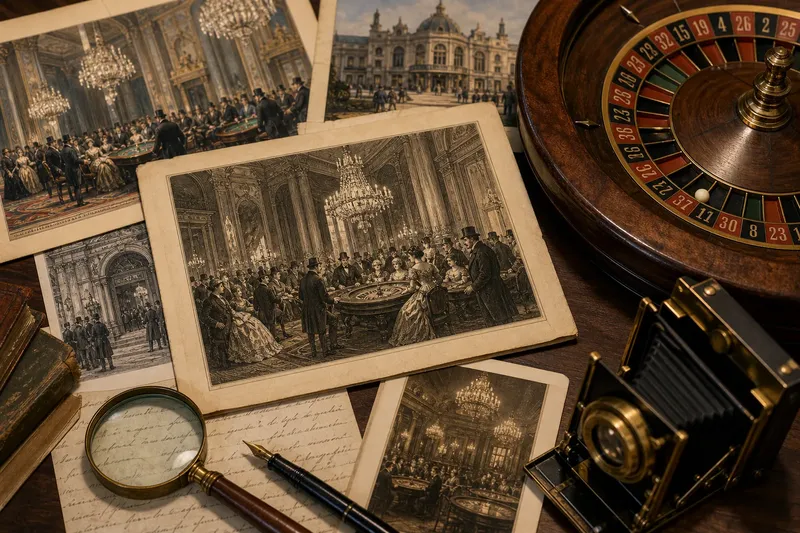
A print seller in nineteenth-century Paris might offer a customer a view of a gaming room without opening its door. Casino images travelled this way: as illustrations, descriptions and later photographs that made particular rooms visible to people who had never visited them.
Casino image history
The story is not a simple march from secrecy to openness. Gaming venues differed by city and period, and images served different purposes: some recorded a place, some advertised it, and others borrowed its atmosphere for a story. A print of a gaming salon is evidence of how its maker chose to depict that setting; it is not, on its own, a reliable account of who entered or how play usually unfolded.
In eighteenth-century Europe, for instance, accounts and depictions of spa towns such as Baden-Baden and German gaming resorts circulated alongside the venues themselves. Later, illustrated newspapers, travel writing and commercial posters gave casino scenes further routes into public view. The materials and audiences changed over time, but no single date marks the moment when casinos became publicly imaginable.
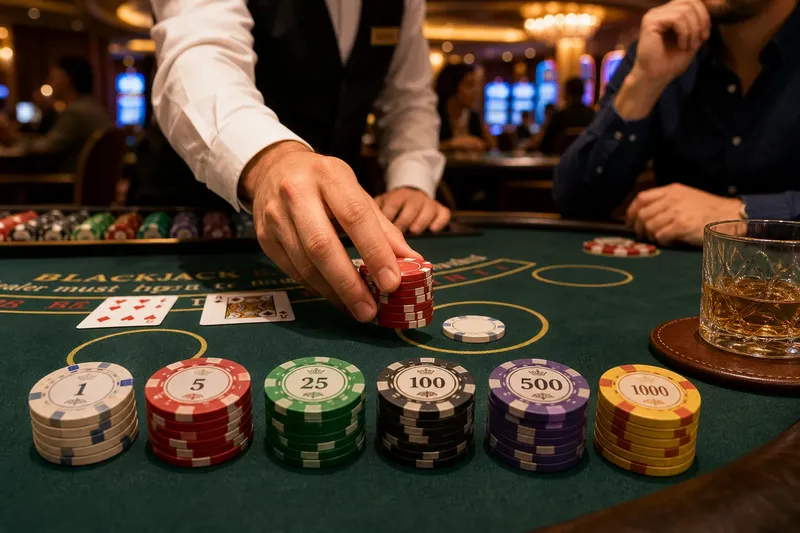
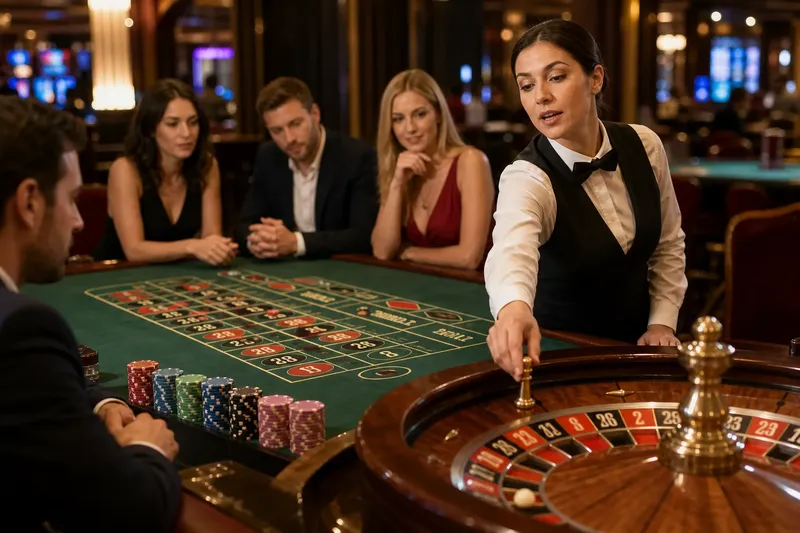
Photography and film added another kind of repeatable image. A roulette wheel, a chandelier or a formally dressed player could quickly identify a casino setting. Those objects made scenes easy to recognise, much as a key on a ring stands for a locked door: useful as a sign, but no substitute for the place behind it.
Reading historical images
Start with the object’s purpose and provenance. A painting commissioned by a patron, a satirical print, a newspaper illustration and a travel advertisement all make different claims. Captions and archival catalogues can help identify a venue, but a confident caption is not the same as independent confirmation.
- Check the date and place. If both are supported by a catalogue or contemporary caption, treat them as a starting point; if either is uncertain, describe the image as undated or unattributed rather than assigning it to a venue.
- Identify the medium and maker. If the object is an advertisement or commissioned image, read it as a designed impression; if its purpose is unclear, avoid assuming it documents ordinary life.
- Read the caption against visible details. If names, signs or architecture agree with the caption, record that match; if they conflict or are absent, keep the identification provisional.
- Look for the intended audience. If the image promotes travel or a venue, expect selective presentation; if it is satirical, account for exaggeration before drawing conclusions about behaviour.
- Separate depicted action from typical practice. If the image shows a dramatic crowd or a striking loss, describe that scene only; if you need to discuss routine play, seek written descriptions of rules and everyday activity.
- Note what the frame excludes. If staff, entrances or ordinary visitors are missing, do not infer that they were absent from the venue; if their presence matters to your claim, look for another source that addresses it.
Say you find a print dated to the nineteenth century, captioned as a famous gaming room but without a venue name. You first check its catalogue entry and find that the date is supplied, while the place remains unidentified. You then compare the caption with the print: a wheel and chandelier fit a gaming-room scene, but neither identifies a particular city. The sound result is to describe it as an image of casino glamour from that period, not as a portrait of a named room.
What casino pictures show?
Does an image prove a venue existed?
Not by itself. A named caption, catalogue record and details consistent with independent descriptions make an identification more plausible; without them, the picture may be imagined, reconstructed or loosely inspired by a real place.
Why do some images suggest secrecy?
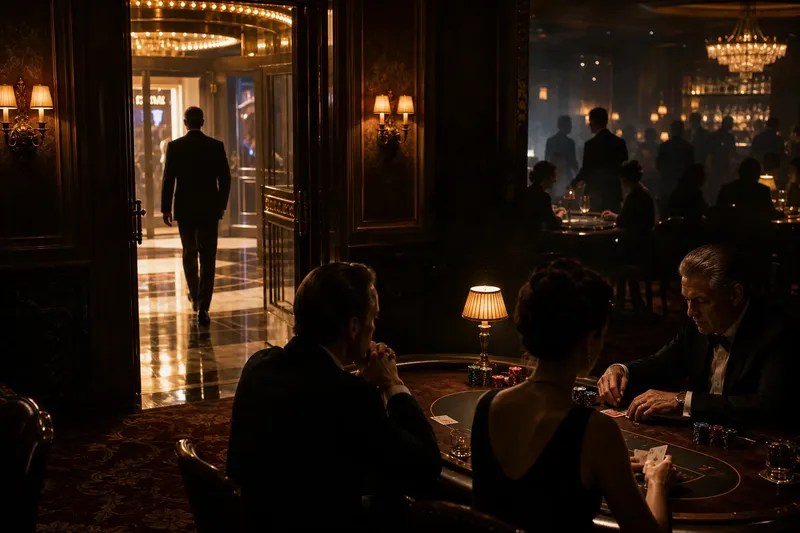
Restricted access could shape the reputation of particular venues, while writers and artists could heighten that impression for effect. A closed door in an illustration tells you about the scene the maker chose, not automatically about the venue’s rules.
When did casino imagery spread?
There was no single turning point. Prints, newspapers, travel writing, advertising, photography and film each helped circulate casino scenes in different periods and places.
Can a glamorous picture show how people played?
It can show what its maker chose to depict, but glamour is not a record of routine. To discuss how play worked, pair the image with sources on rules, staff, visitors and the venue’s operation.
From place to symbol
As casino scenes appeared across print and entertainment, a small visual vocabulary became familiar. A wheel could suggest uncertainty, a green table formal play, and a grand entrance a passage into a more theatrical setting. These signs helped storytellers establish a scene quickly, while leaving its actual social arrangements outside the frame.
That distinction matters when tracing casino image history. A picture can reveal which objects and moods an audience was expected to recognise, and its materials can offer clues about when and for whom it was made. Claims about access, rules or everyday behaviour need more: named places, dated records and accounts that describe the people inside.
Keep the image and the venue as separate subjects. The image records a choice of framing; corroborating sources can establish more about the room itself. That modest distinction is often enough to stop a familiar roulette wheel from carrying the weight of an entire history.